The Brickworks Patternshop
A journey through the skilled craft of patternmaking at John G. Stein & Co., where apprentices learned their trade and master craftsmen created the moulds that shaped the bricks of industry.
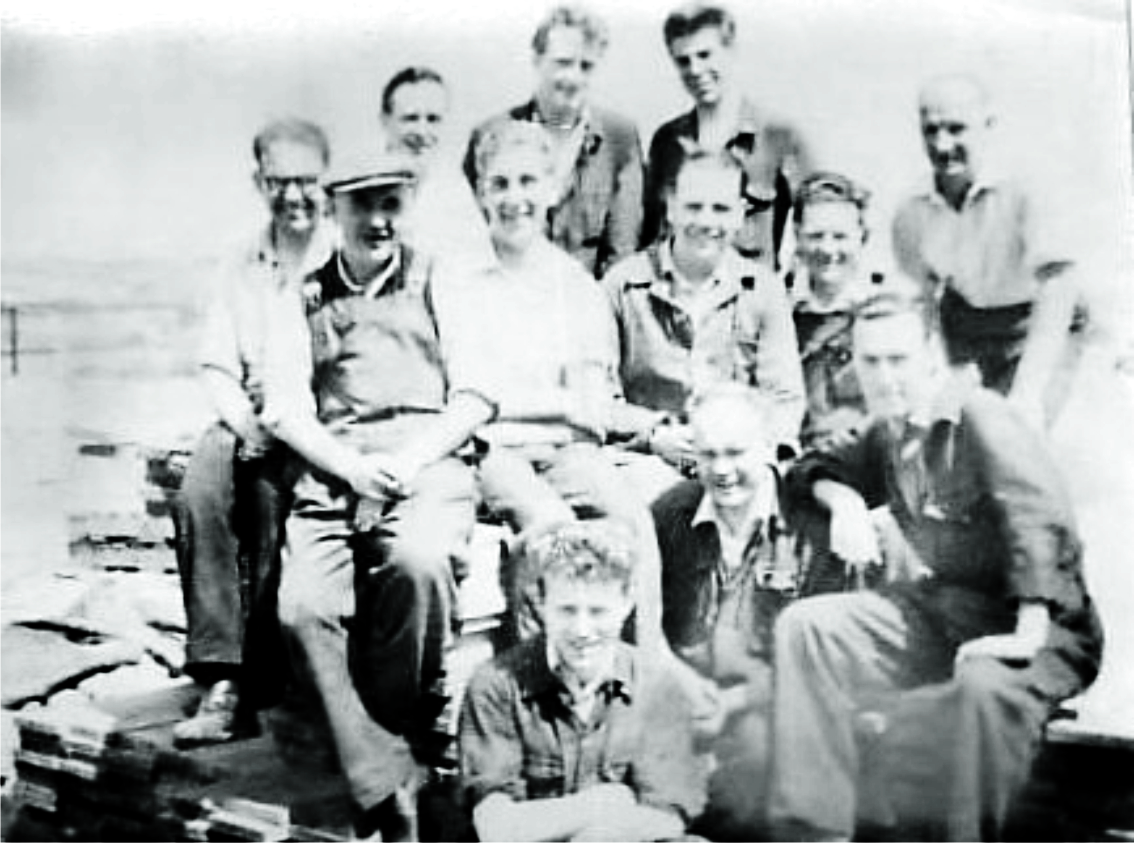
Patternshop workers — the skilled craftsmen who shaped industrial Britain
Fellow craftsmen and colleagues
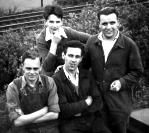
The patternshop team
The Apprentice's Beginning
In January 1950 I started an apprenticeship as a patternmaker in the brickworks at the marvellous wage of 9¾d per hour.
The newest apprentice got all the odd jobs to do. These included making the tea, sweeping up, going for the papers, keeping the fire going, running messages, going for ice cream in the summer, plus any other jobs that the patternmakers wanted done.
The sawdust from the machines was collected and used to line the football field on matchdays. The foreman who started me, Walter Bain, was off ill and died a few days later so I never got to meet him. The underforeman, Tommy Hamilton, was in charge for some time before another foreman was appointed.
Training and Education
The new foreman decided to change a few practices. He decided that the apprentice should get a more formal training so I was to work with one of the patternmakers from 7am until breakfast time at 9.30am. Unfortunately no-one took into consideration that I went for the tea for the men at 9.15am. The patternmaker wouldn't allow me to go for the tea and I thought a riot was going to start. A compromise was reached and I was allowed to go for the tea.
Apprentices had to attend evening classes three nights a week, we were not allowed to attend the trade school which operated in Falkirk during the day. The foreman would ask what I had been learning the previous evening. On one occasion I said we had been doing cubic capacities so he gave me the size of a boiler and asked me to work out the capacity. The patternmaker on the other side of the bench asked me what I was doing and when I told him he started working it out too. Soon half the shop was doing it and all getting different answers. When the foreman discovered this he did not give me any more sums.
The Patternshop
The patternshop was situated on the top storey of a two storey building on the north side of the works and was quite a large building.
The patternmakers when I joined were Tommy Hamilton, David Crawford, Wullie Gladstone, Mungo Reid, Willie Dalrymple, Adam Scott, Adam Dunsmore, Adam Stewart, Johnny Stark, David Anderson, David Lindsay, John Pullar, Archie Gillan and Hugh Campbell who was the apprentice above me.
Later on many other people came to work in the patternshop among them being: David Mitchell, Archie Stanners, Jimmy Scott, Peter Adrian, Ian Preston, Allan Lowe, Bobby McLean, Billy Wilson, Walter Watson, Alan Lawson plus some others whose names escape me.
Daily Life and Competitions
There were always competitions on the go at any one time. Most of the meal breaks saw the bridge school in action where the game was taken very seriously and people sometimes stopped talking to their partners because they had made a wrong call. There was also a pitchers competition. Pitchers are a smaller version of quoits where the pitchers were thrown at a pin stuck in the centre of a hole filled with clay. Darts were also played quite a lot.
Each day some of the men played a Target word game taken from one of the newspapers. No one was allowed to start until after breakfast time and the competition was fierce to get the nine letter word plus the target of other words.
Various small "arguments" were started for a bit of fun. For instance, one person would say that he could walk from Allandale to Denny in 30 minutes and somebody would disagree with him. The others would join in until everyone was at it. All good fun.
The Steel Workers
There were other patternmakers in the shop who made moulds out of steel. They were not allowed to join the United Patternmakers Association for some reason but were allowed to join the Engineering Union and I don't think they served a recognised apprenticeship.
Among them were Duncan McKenzie, Wullie Moffat, Alex Sorley, George Kordas, Jimmy Murphy, Billy Beck & Frank Burgess. George Kordas was Polish and had escaped from Poland when the Germans invaded that land at the start of the Second World War. He was quite strong and competed in hammer throwing at the Highland Games.
There was an ongoing competition in the shop concerning a block of steel which was shaped for bending pieces of steel to be part of the wooden moulds. It was quite heavy and the object was to see how many times you could raise it above your head using only one hand. The record stood at about 80 times until somebody tempted George to have a go. He managed app. 300 and put an end to the competition and also just about put an end to himself as he was off work for a few days after straining the muscles of his back.
Materials and Methods
The railway siding ran under the patternshop and the wood for making the patterns was delivered in wagons and pulled up through a trapdoor in the floor of the patternshop by the patternmakers. This could be quite a heavy job especially when the 20ft lengths of yellow pine were wet.
On my first time at this job I was to partner another patternmaker to stack the timber at the far end of the shop when it was pulled up by the others. When we had finished the foreman said he thought the stacks were not very safe and asked us to fix it. Unfortunately the other patternmaker thought otherwise and refused to fix it. As a result he was sacked. I found out later that there had been bad blood between them for some time.
Yellow pine was good wood to work with but could be quite expensive and the foreman decided to buy cheaper timber which was full of knots and the grain was uneven. In addition to this, the yellow pine was good for making "home jobs".
Characters and Stories
"Home jobs" were an on-going occupation in the patternshop and leant a bit variety to the work. These jobs were not always for the patternmakers as the various managers in the works wanted jobs done too. One Christmas the whole shop was stopped to make a layout for one of the Stein's son's railway which was to be a Christmas present for him. It was quite an expensive present.
Archie Gillan, one of the patternmakers, had been given a job for life after losing a leg in an accident at the brick machines. Archie played on this and I don't think I ever saw him making a mould. His principal job was looking after the mould stores and telling anyone where to find a mould that was required. He also slept part of the day.
Archie needed some green paint at home and duly filled a lemonade bottle with this and placed it inside his coat pocket at 5pm when he was going home. Unfortunately the weight was too much for the pocket and the bottle fell out and smashed on the ground at his feet while he was clocking out. Archie just walked on and later we saw the works manager and the watchman looking at this pool of paint. Undaunted Archie arrived at work the next morning with one black shoe and one green shoe !!!
He met a couple on holiday once and, as people do, they invited him to visit them if he was in the area. Archie took them up on this and visited them in Dunoon…… every Friday evening and stayed till Sunday. One Friday when he arrived he discovered they had moved to another town without telling him. It took Archie a week or two to trace them and resume his visits each weekend.
The Craft of Patternmaking
Patternmaking was quite a skilled job and very different but equally as skilled as patternmaking in the foundries. The foundry patternmakers made patterns which were the exact shape of the finished casting whereas the brickwork patternmaker made moulds in which the finished brick was moulded.
There was a very large range of bricks which were hand made in the works and many intricate shapes from arches to domes. They also made bricks for the fireboxes of railway steam engines and also made the firebox linings for the Queen Mary & Queen Elizabeth ocean liners and many others.
The patternmakers were left pretty much on their own without much interference mainly because none of the higher management knew much about patternmaking. Occasionally one of the directors would make an annual appearance and just stand in the middle of the shop and look around just to make sure nobody had stolen it !