Leisure and Recreation
Growing up in Allandale during the 1940s and 1950s - a time of adventure, community spirit, and simple pleasures in the Scottish countryside.
A Great Place to Grow Up
Most people would say that Allandale was a great place to grow up in in the 40s and 50s.
There was always plenty to do although there was not a lot of organised entertainment. There was an abundance of open space to play games such as football and get up to all kinds of mischief.
The Canal - Fishing and Swimming
The canal was a popular area for fishing. Perch, pike and eels were quite plentiful and unfortunately we hadn't learned to put them back into the canal after we caught them as they were no use for eating. But there was always a plentiful supply when we went back with another supply of worms.
Swimming in the canal was not very popular as we were well warned about the dangers of drowning but we did have an occasional paddle. There were not many drowning accidents although we did lose a pal in Tommy O'Neill who fell off an overhanging tree branch.
Adam Baxter from Woodend and a Mr. Taylor from Allandale also drowned after going for a swim after finishing work. Adam Baxter's body was not found until many days later when it floated to the surface 100 yards from where he drowned. It was spotted by Italian P.O.W.s on their way to Steins and one of them dived in and recovered the body. Mrs. Kennedy from Allandale also drowned near her house.
When the fishing fleets were moving from one coast to the other through the canal, we would wait at Underwood Lock and ask for a sail to the next lock, Lock 18. Then run back down for another sail. In the winter the canal would freeze over and even the icebreaker, the Clydeforth, couldn't keep the way open. The more adventurous would walk across the ice but this was not something to be tried often.
Outdoor Adventures
In the autumn, burning the grass was a popular craze and the youngsters would come home smelling of smoke and, of course, your mother would know what you had been doing. But the fires never seemed to get out of control.
There was a plentiful supply of woods round about where we would go to play games, climb trees and build huts. We would be away all day and no-one seemed to worry where we were.
Boy Scouts
There was a local troop of the Boy Scouts, the 57th Stirlingshire which met every Friday evening at 7pm. This was put back to 7.15pm when the serial 'Dick Barton' was on the radio from 6.45pm until 7pm. The Scoutmaster was Willie Weir and later Mungo Reid.
We did all the usual scout activities and went to the annual camp in the summer for two weeks or three weeks. The camps were at Montrose for two years then went to Berwick-on-Tweed. We always went by train. When we arrived at Berwick, we were transported in a coal lorry to the camp which was miles outside the town.
Mungo the scoutmaster at that time arrived later as he had to work and was horrified at how far we were out of town as he wanted to be able to go to the dancing. There was always plenty of adults to look after us. So we transferred to Spittal to be nearer civilisation.
I got into trouble when I received a letter from my mother in which she had enclosed a £1 note to be given to Alex. Unfortunately I gave it to Alex Lyons instead of Alex Henderson which annoyed his family greatly when they came to visit. The troop needed football strips and decided to raise funds by collecting glass jam jars which the Co-op said they would buy. Unfortunately, we collected that many that the manager took fright and would only pay us for part of the collection.
Girl Guides and Adult Activities
The Girl Guides and Brownies also had a company in the village.
For the men in the village there was the bowling green which had been built by Steins in 1929 for employees only. No women played bowls. Later non-employees were admitted and it was sold to the members in 1980.
The bowling green clubhouse was also the venue for whist drives plus dominoes for those who couldn't play whist. Whist was a serious activity and not for the fainthearted. You didn't make many friends if you played the wrong card against your partner. The village library was also accommodated in the clubhouse and officiated by Helen Millar and Jimmy Benson on one evening per week. You were supposed to be limited to three books at a time but this was frequently ignored.
The Bowling Green
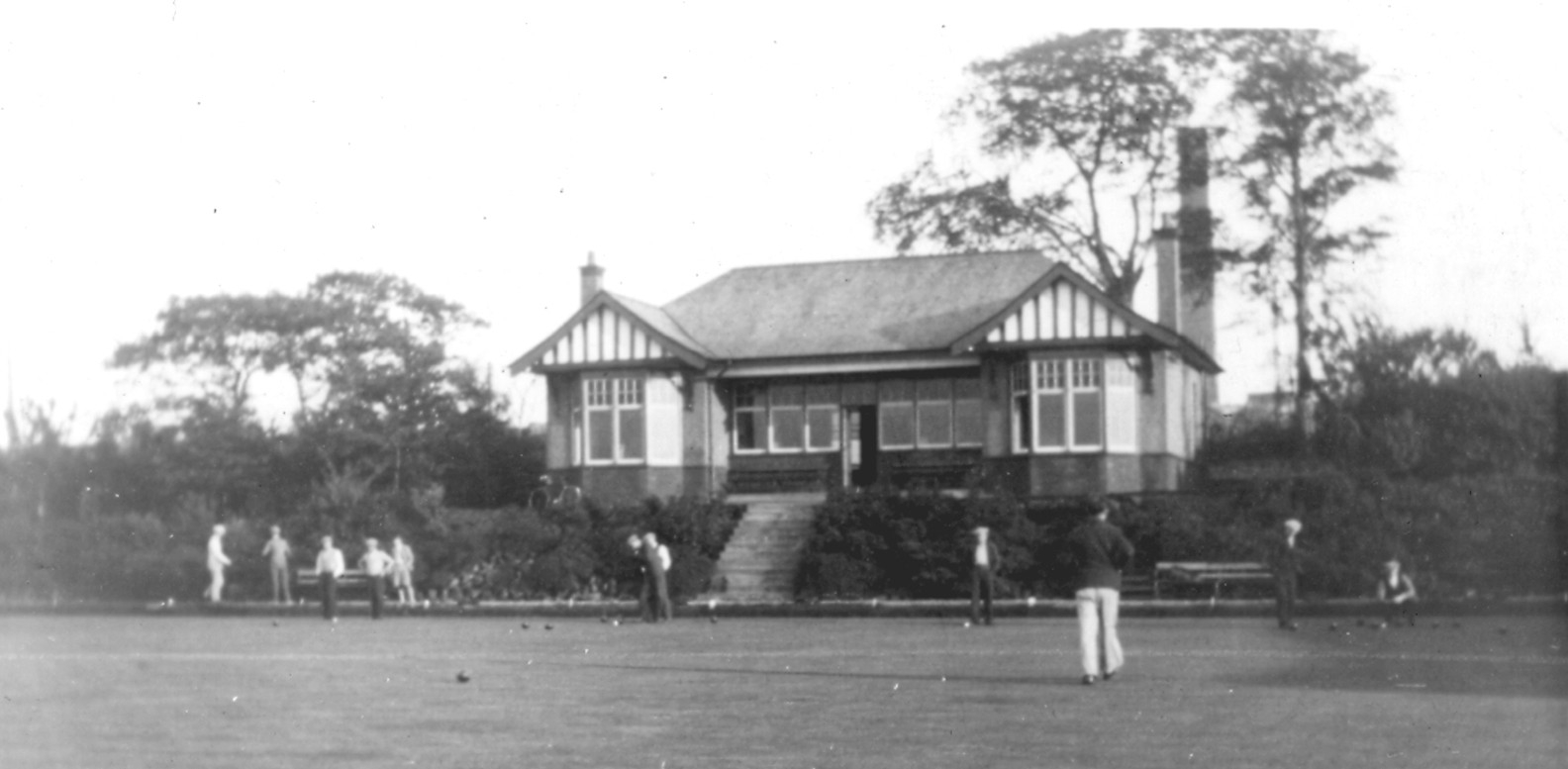
Allandale Bowling Green Clubhouse built by Steins in 1929
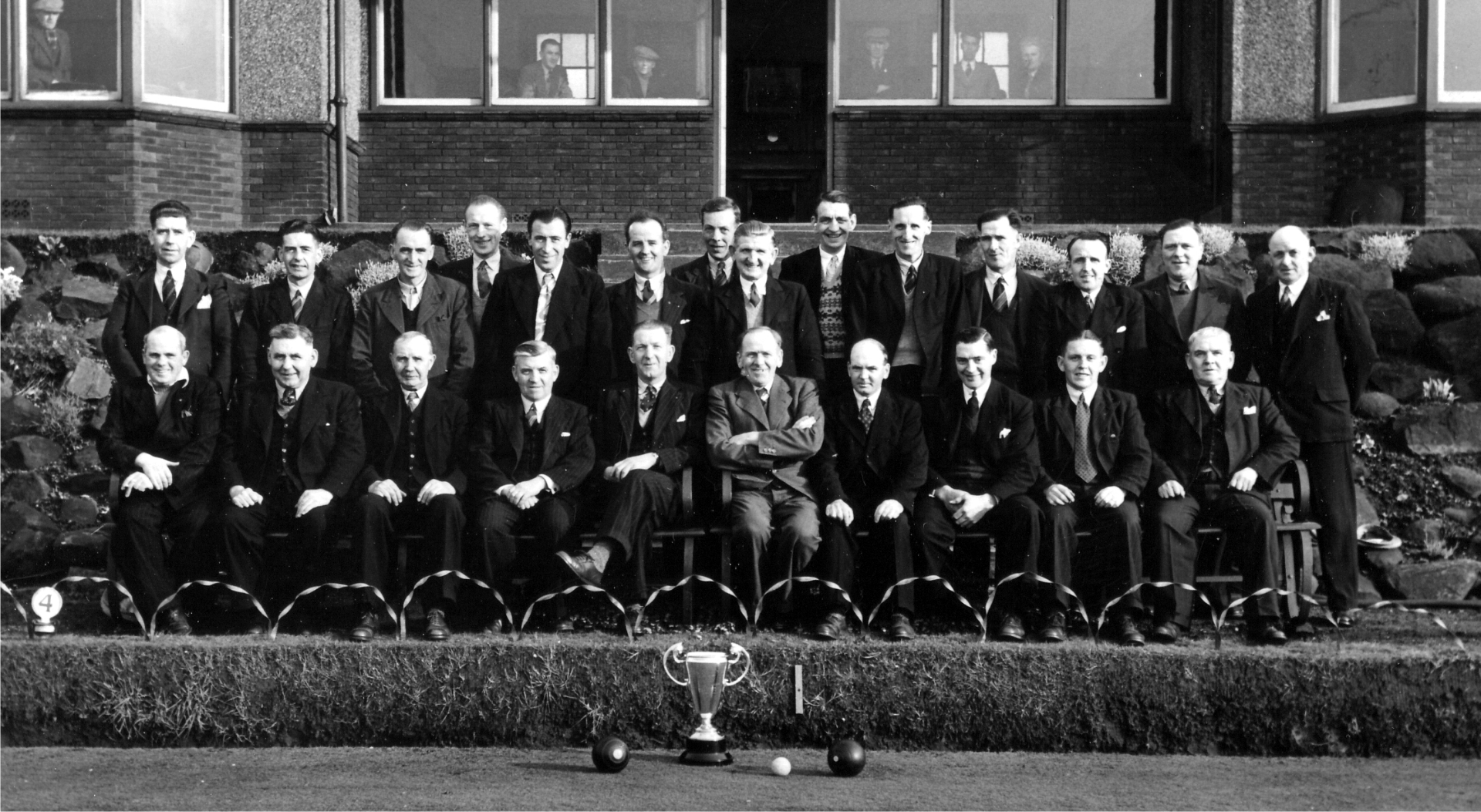
Bowling club members celebrating with championship trophy
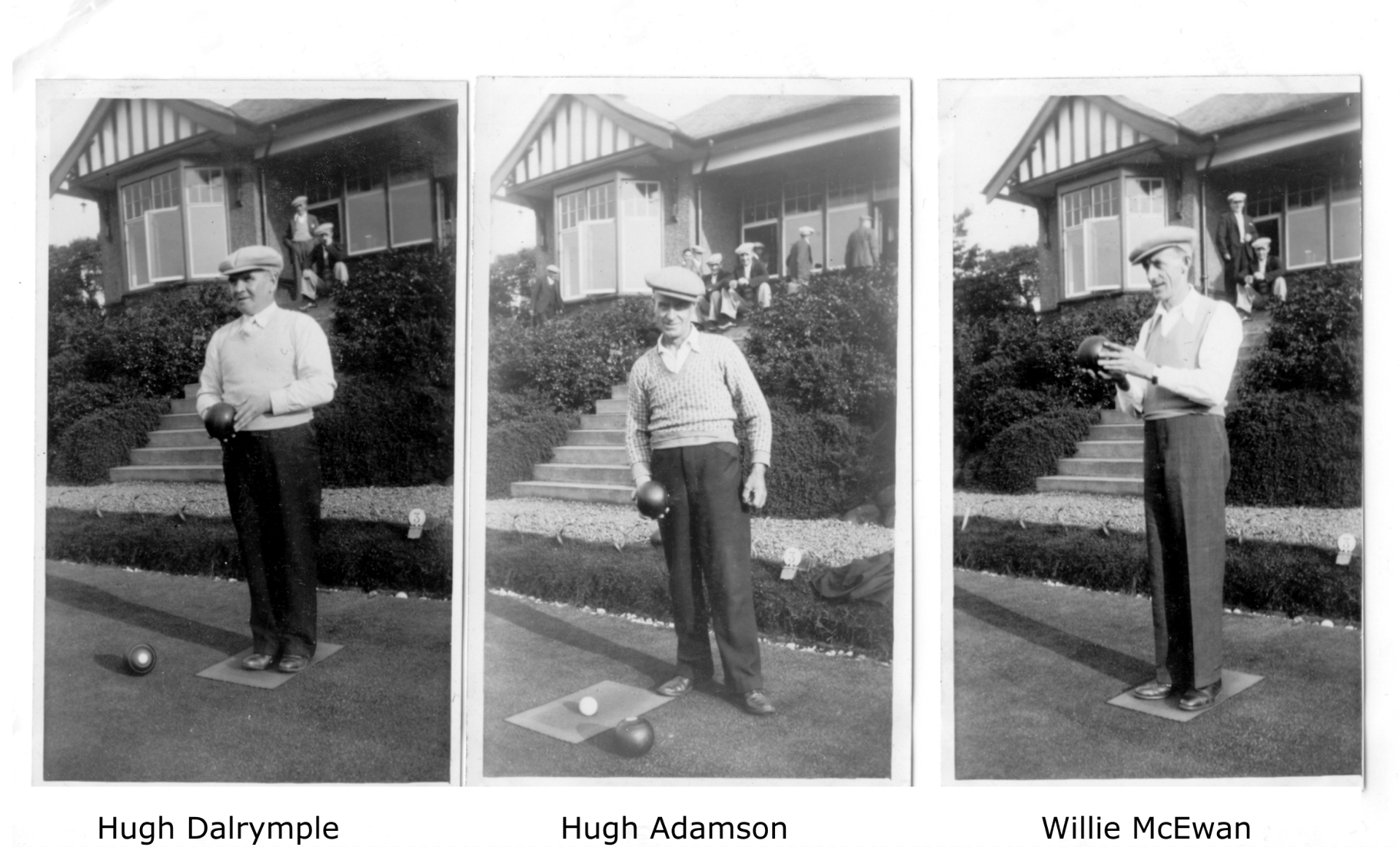
Hugh Dalrymple, Hugh Adamson, and Willie McEwan
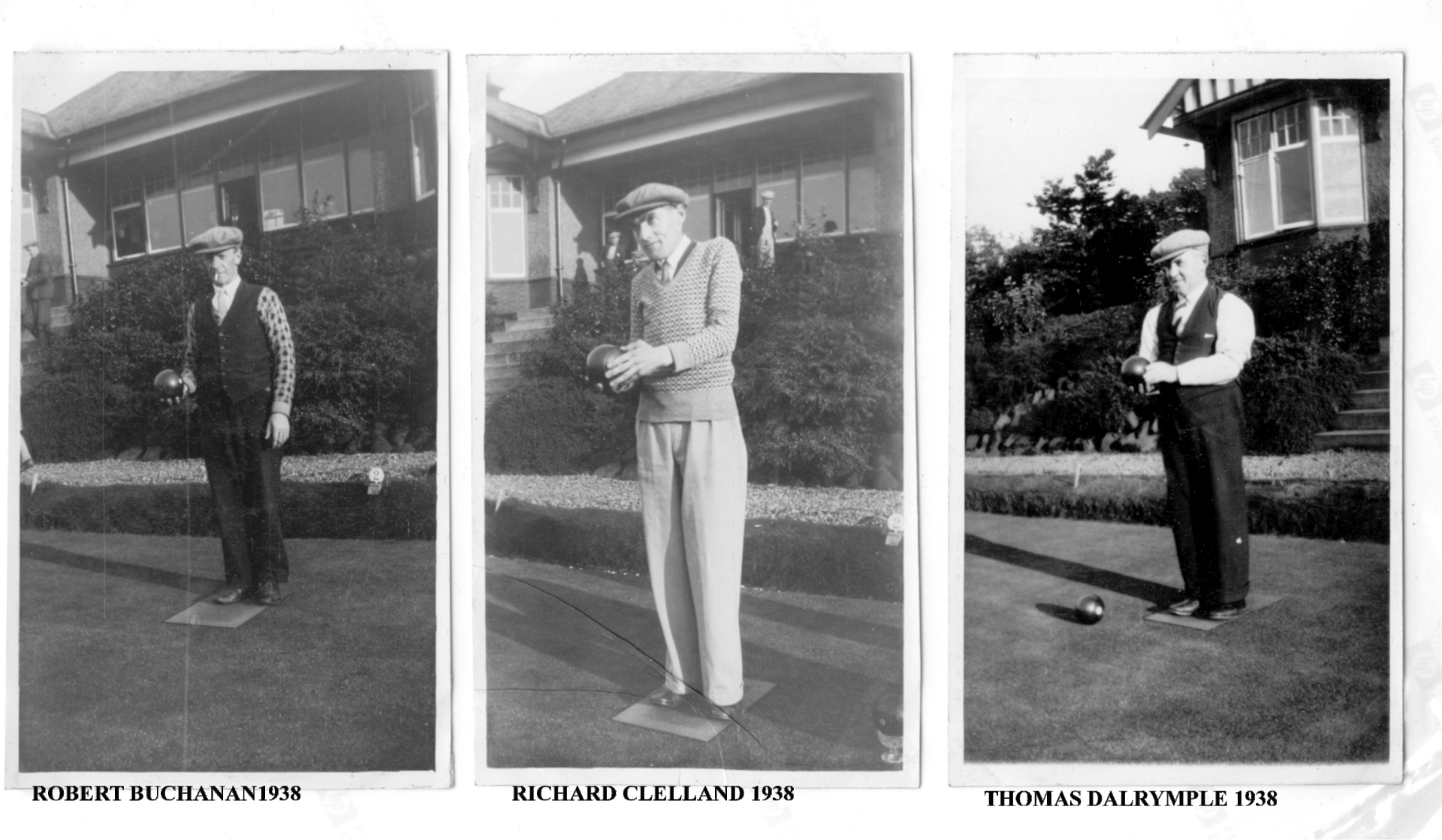
Robert Buchanan, Richard Clelland, and Thomas Dalrymple (1938)
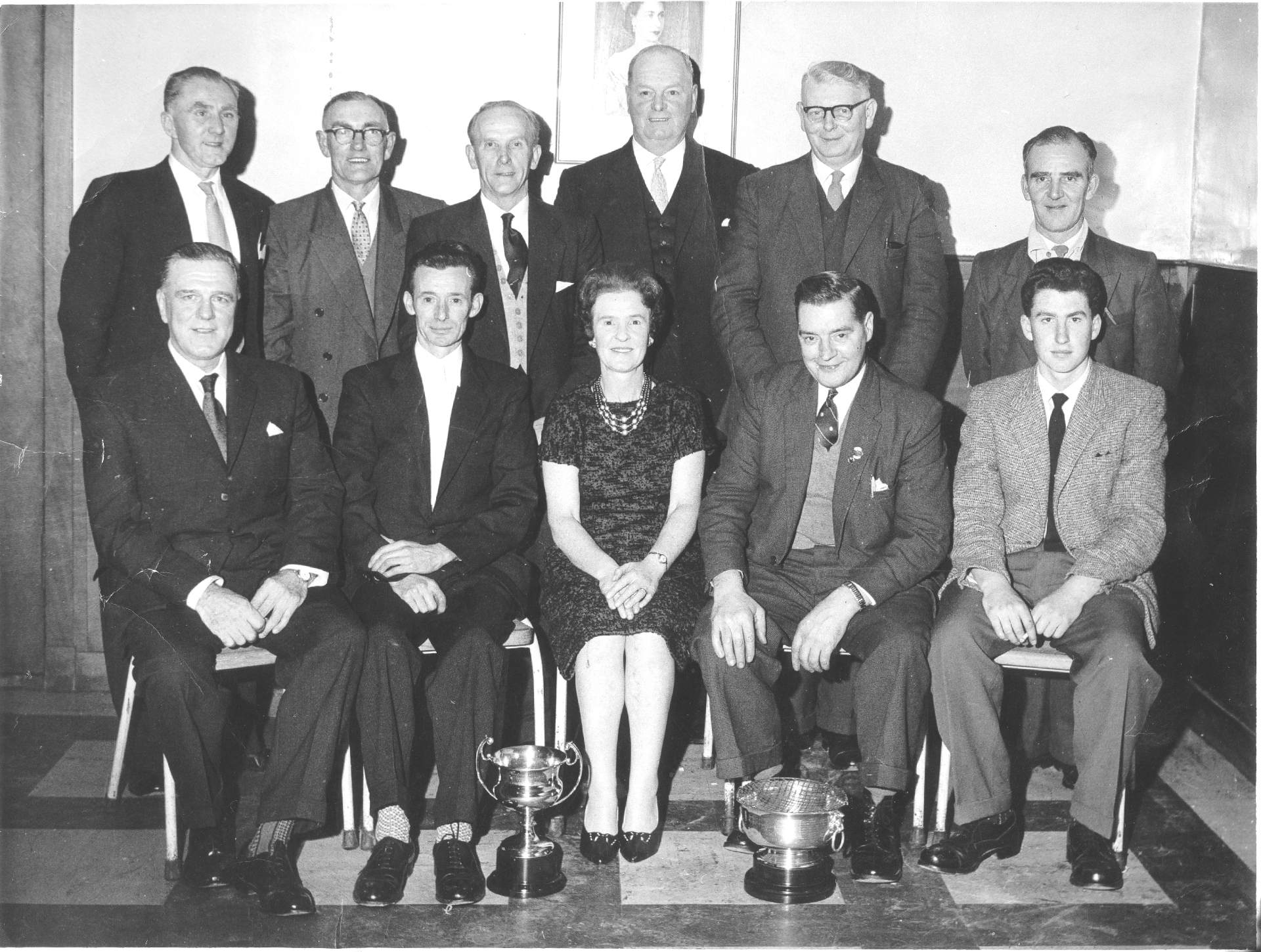
Bowling club committee members with their championship trophies
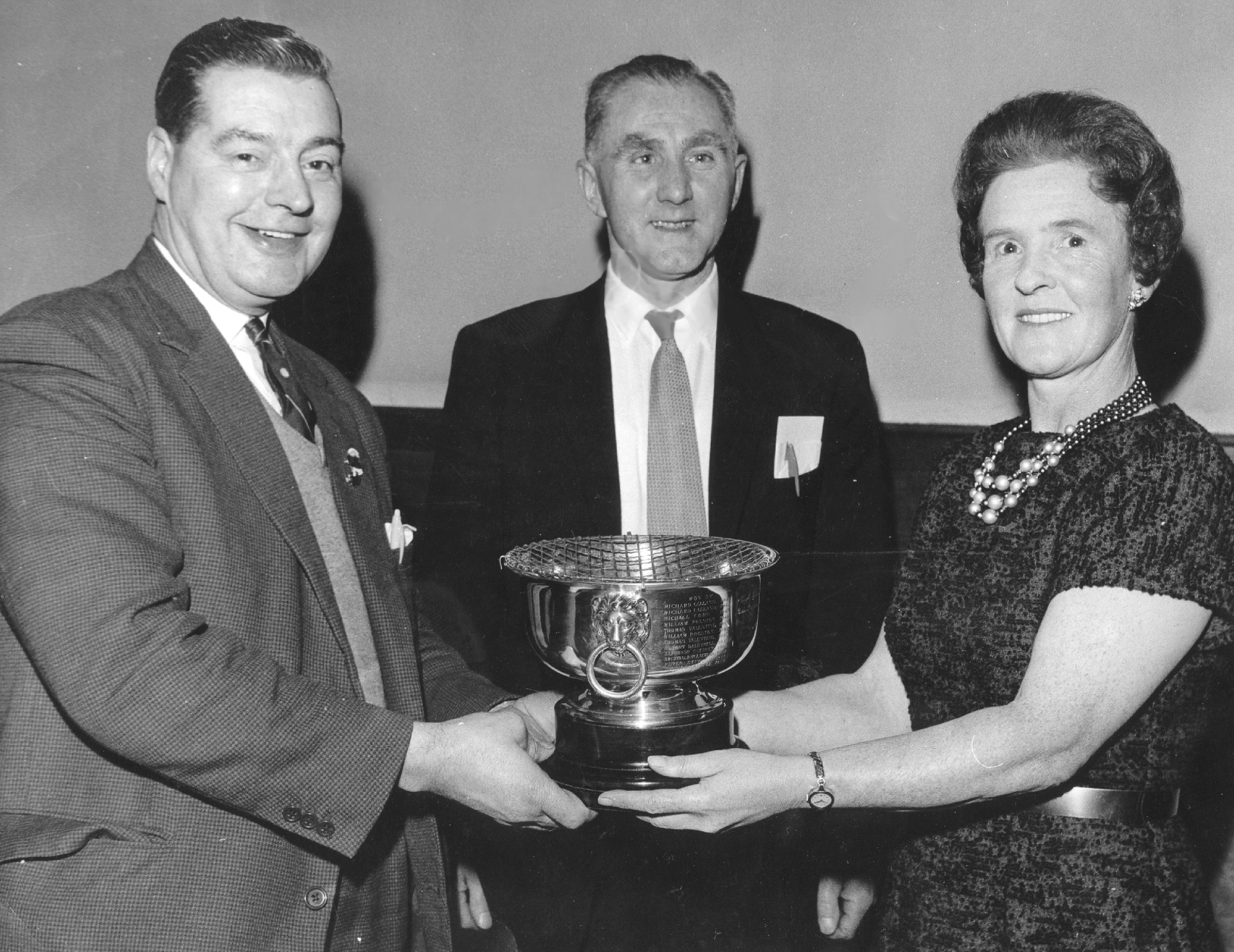
Championship trophy presentation ceremony
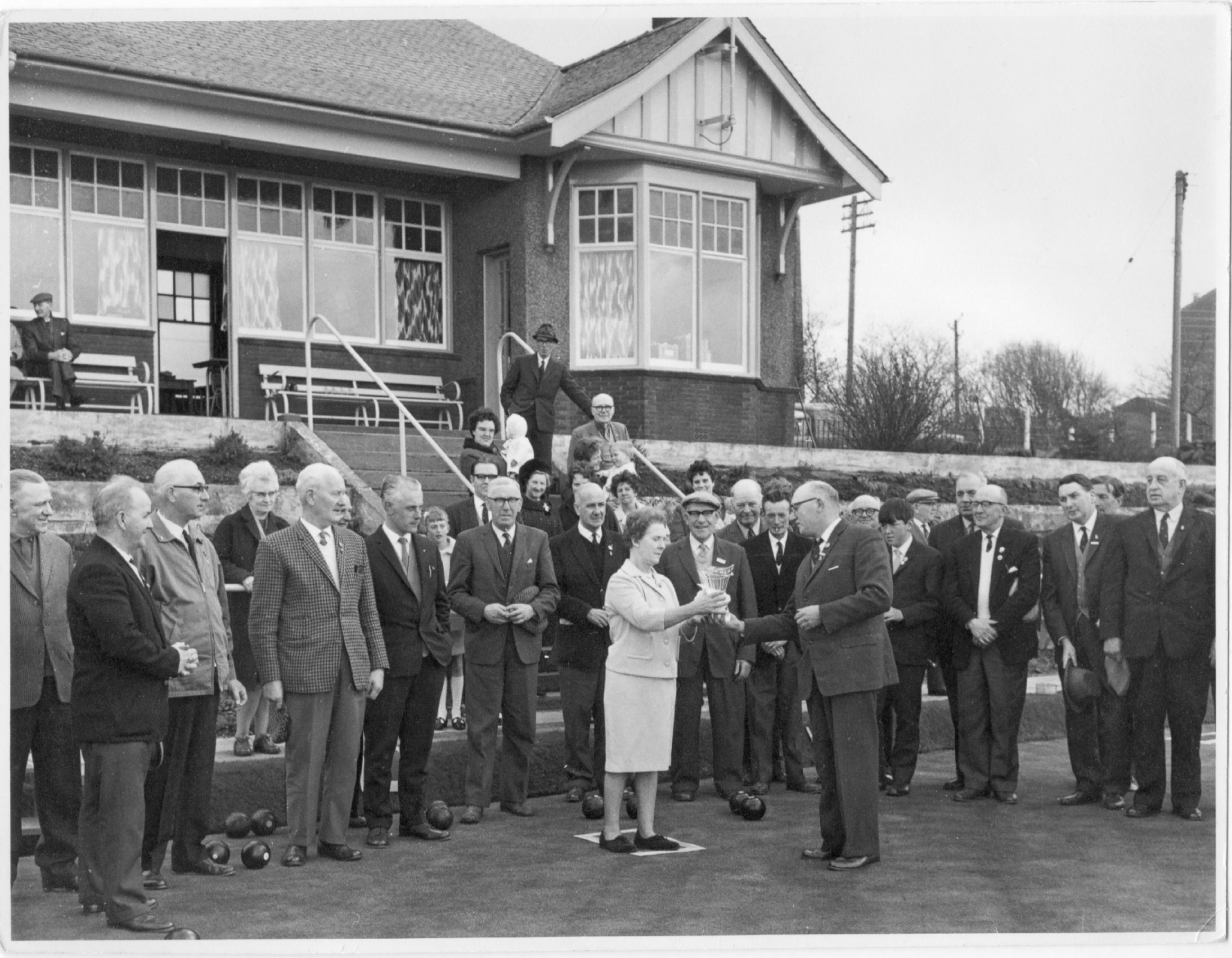
Official club opening ceremony with members and guests
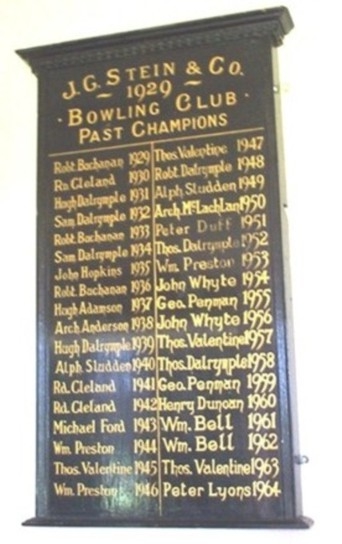
Past Champions honour board
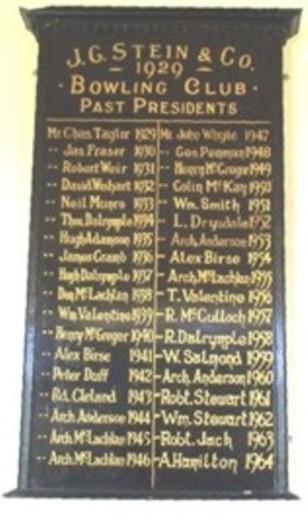
Past Presidents honour board
Musical and Dramatic Activities
Before the war, there was an active male voice choir in the village but this was wound up in 1941 when the funds of the choir were donated to provide equipment for the new ambulance for the St. Andrews Ambulance Association. Among the members were Jimmy Benson, Hugh Adamson & G. Minto.
The works canteen was also a venue for social activities. There were concert parties at various times, the adult one was formed in 1941 and was called the "Dale Concert Party" under the direction of Mr. John Moffat and they operated during the war years to raise money for the war effort.
The children's one was organised by John and Agnes Hutchison who put in many hours of hard work rehearsing the children for a one-off concert. This consisted of musical items and short playlets. Of course, these concerts were always well supported by all the parents and friends of the participants.
Recreation Club and Football
Also in the canteen, a recreational club was held with various games and carpet bowls. The recreation club was eventually moved to prefabricated buildings at the end of the football field. These buildings had previously been used as offices at Manuel Works. The new building had table tennis, billiards and darts plus a television room. Refreshments such as tea, soft drinks and biscuits could be purchased from George Stewart the clubmaster.
Allandale had a football team which played in the Stirlingshire Welfare League. One of the highlights I can remember is the team beating Grangemouth Dockers in the final of the Stirlingshire Welfare Cup at Brockville. Among the players were Jimmy 'Hector' McKenzie, Jakey Hamilton, Jimmy Millar, Jock Millar, Maxie Millar, Adam Dunsmore and Dick MacDonald, who was the lockkeeper at Lock 18 which was just below the football field.
Allandale Football Teams
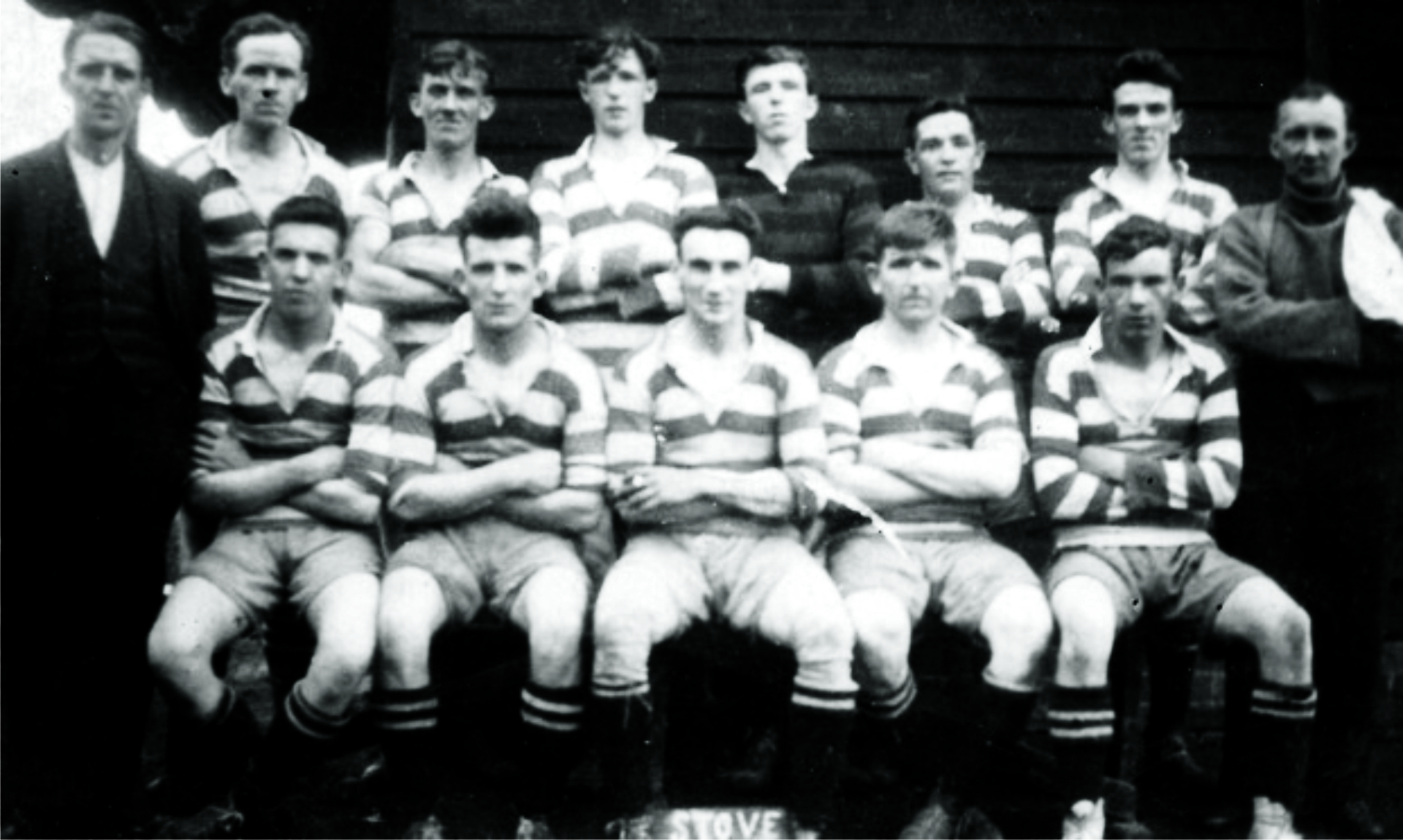
Allandale Football Team - Early squad photo
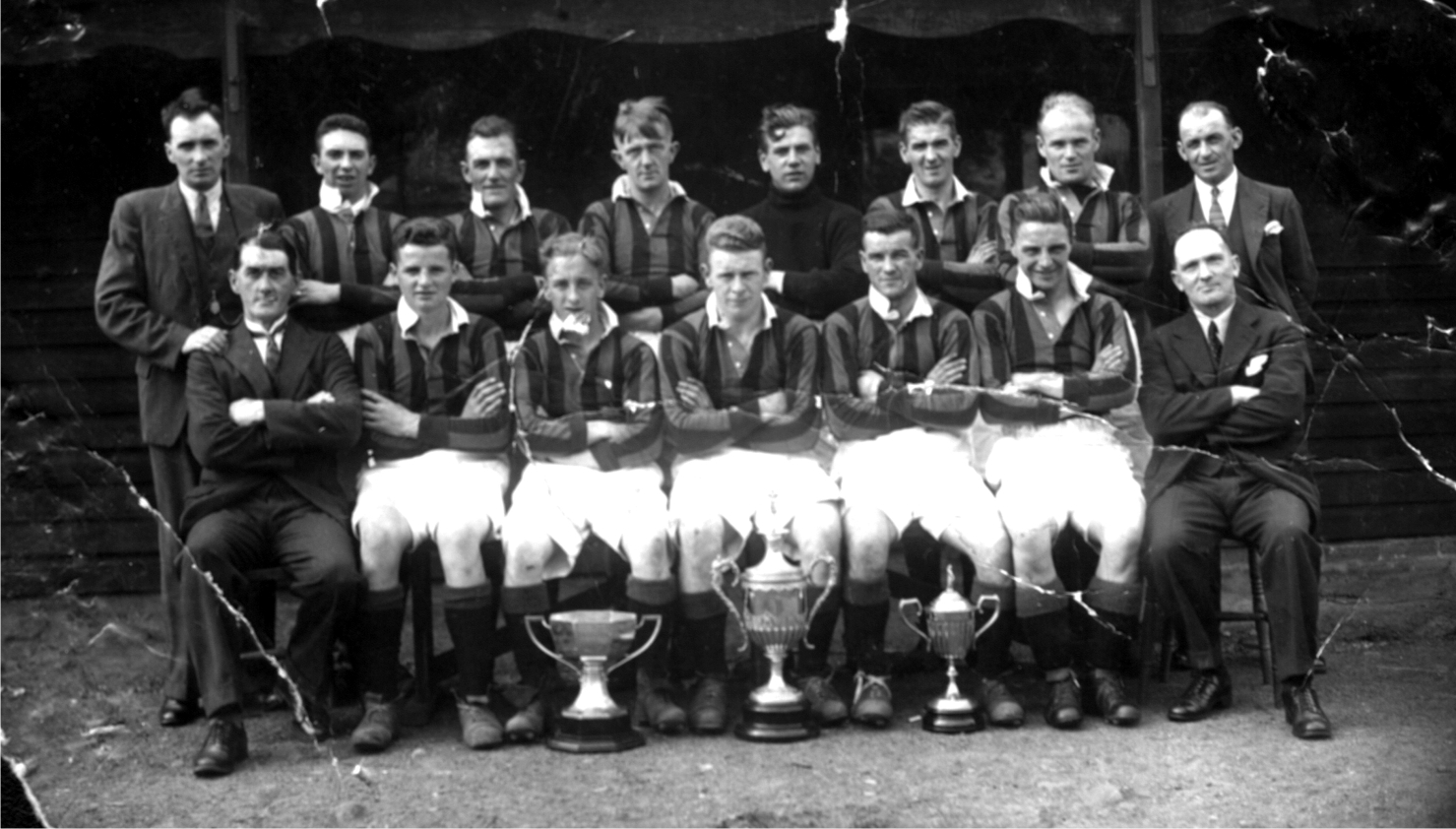
Allandale Football Team with their championship trophies
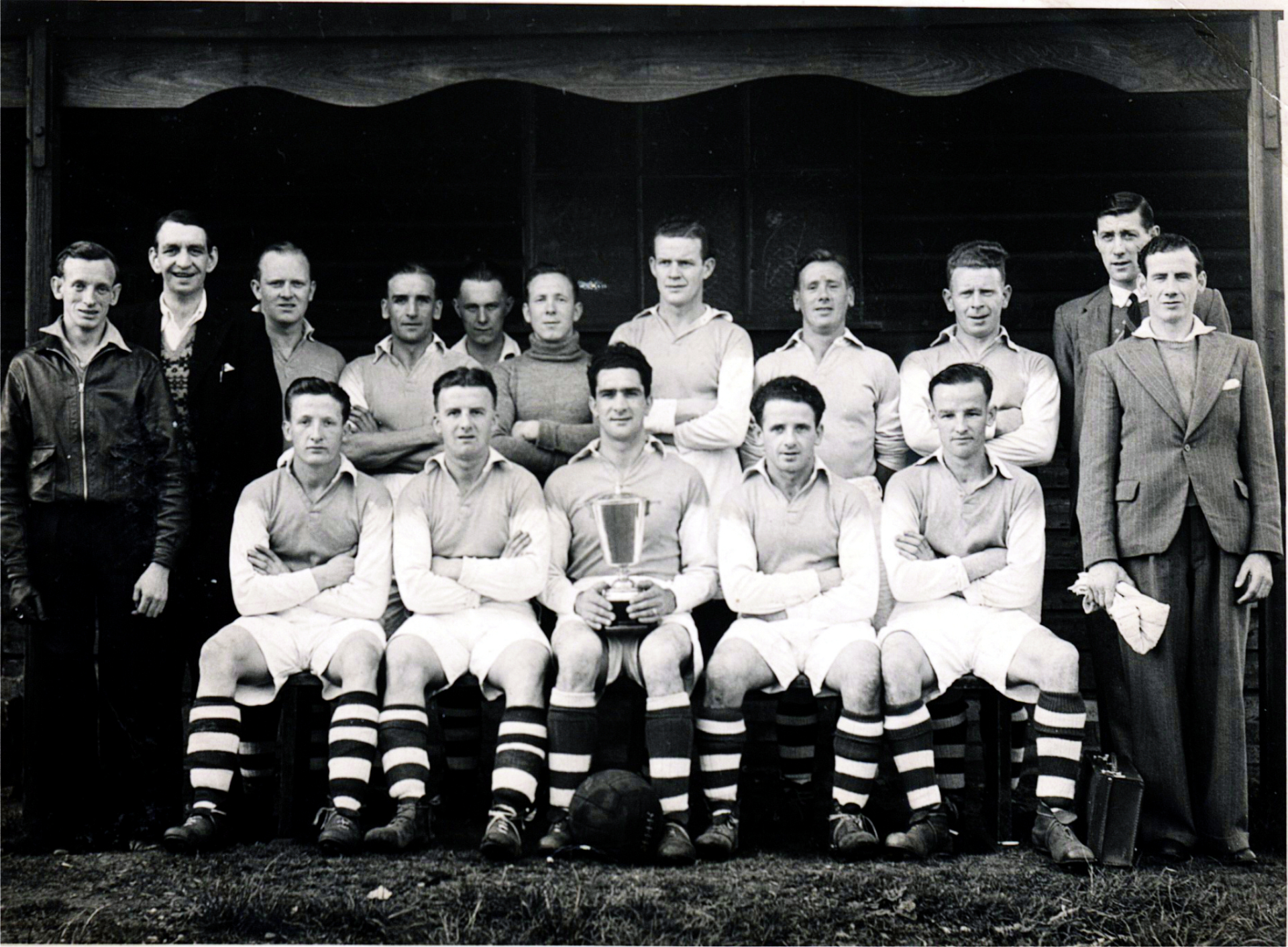
Allandale Football Team - Championship winning season
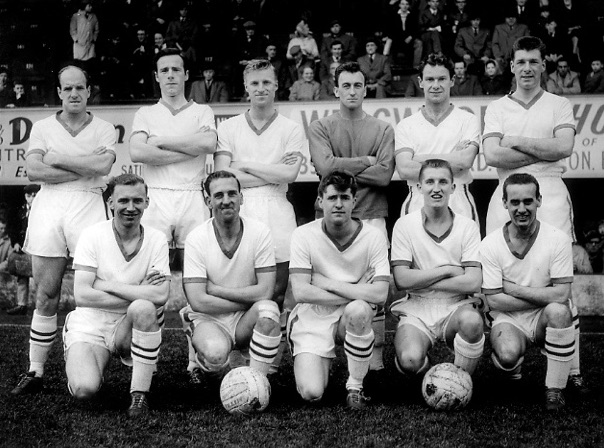
Promotion Team – Season 1960–61. Back: Scoular, Walker, Lawton, Gebbie, Dick, McCalman. Front: Atkinson, Buchanan, Spratt, Gibson, Anders. (Photograph by kind permission of Bradford Telegraph & Argus.)
Drinking and Dancing
There were no pubs or hotels in the immediate vicinity of Allandale. The bowling club was not licensed. If the men wanted a drink they had to either take the bus to Bonnybridge or Falkirk. They could walk over the canal and Underwood Loan to Longcroft but not many bothered. Jock Thomson who had a licensed grocery in Longcroft served drink without the knowledge of the authorities in a back room.
Later, the post office was taken over by Bill Stewart who had been the manager of the Co-op and he applied for an off-sales license for his shop. The annual staff ball of the company, which was only for the management and office staff, was held in Mathiesons in Falkirk High Street and there was no alcohol served until 1962. But the more daring were well oiled before they went to the ball.
Before the Second World War the Stein Ball was held in Bonnybridge public hall. One of the Mrs. Steins, probably Mrs. Alan Stein, liked dancing the old set dances like the Lancers and people to dance in the sets were informed beforehand so that they could learn the dances if they did not know them. It was a very formal occasion.
Radio Entertainment
During the winter nights, especially if it was cold or raining, the radio was as much enjoyed as the television is now. There were all the favourites, "ITMA", "Have A Go" with Wilfred Pickles, "Paul Temple", serials like "Dick Barton, Special Agent", "The McFlannels".
The news was followed every night during the war by "Into Battle" which, with its distinctive theme, was a favourite with the details, or maybe part of the details, of all the battle fronts. My father, he had been demobbed just before the end of the war because of his age, had a large map of Europe mounted on a board on which he coloured in all the advances reported that day.
Most of the radios in the village were powered by accumulators. It was advisable to have two and one was on charge ready for when the other gave out. Other communities had to pay to have their accumulators recharged but Allandale was lucky as they could get them recharged for nothing at the brickworks. Care had to be taken carrying them as the acid they contained could spill out and burn your skin or clothes.
Gala Day
A big event in the village was the gala day which took place in June each year. The children dressed in their finest clothes and with their tin mug on a ribbon round their neck paraded through the village led by the pipe band to the football field.
During the war when the pipe band was not available, brass bands were brought in from various parts of the district. There they were all given a bag containing cakes and buns plus a bottle of milk. Then races were held for all age groups with money prizes for the winners. The adults had five-a-side football and tug-of-war. The pipe band played during the afternoon.
If the weather was bad, the cakes, etc. were distributed in the works canteen and the races could be held one evening the following week. The Longcroft Co-op and the Bonnybridge Co-op also held gala days for children of the members.
Cinema and Entertainment
The 1940s and 1950s were the boom years for cinemas. Allandale did not have a cinema but occasionally there was a film showing in the canteen. These were probably old documentaries and Charlie Chaplin epics.
The nearest cinema or picture house was Harris's in Bonnybridge where the programme changed three times a week. They also had a matinee on Saturday for the children when the admission was 2d for the wooden seats at the front and 3d for the upholstered seats further back.
Smoking cinnamon sticks was popular at this time among the young ones and we would go to Robertson's shop at Bonnybridge toll to select one which would smoke well. In the evening the admission was 6d for the 'dumps', as the wooden seats were called, 10d for the upholstered seats or, if you were "courting", you could splash out on the double seats at 1/3d at the back.
For this you got a 'B' film, a cartoon, a serial, the news and a big picture. People went to the cinema regularly sometimes without knowing what was on until they got there. When we got more adventurous, we ventured to Falkirk. There were five to choose from in the town centre, The Pavilion at Newmarket Street, The Regal at Prince's Street, The Picture House at Bank Street, The Salon at Vicar Street and the Cinema at Melville Street.
Winter Sports and Sledging
In winter there was always the attraction of the frozen canal to resist but there were plenty of sites available for sledging. The less adventurous could go to Strang's field over the railway but for the ultimate experience you went to the brickworks brae.
The run started at the end of the brickworks then down the hill across the Woodend road, under the railway bridge, across the main road then down the side of the Co-op and finished behind. It was lucky that there was little traffic on the road at peak times but there was no traffic when the snow came so it was fairly safe to cross the road.
For those less fortunate who did not have a sledge there was always the option of borrowing one of the fireman's shovels and riding down on it. By the end of the evening everybody was soaking wet and the brae was like glass which made us very popular with the workmen in the morning.